202 vs 1: what the 2026 NCEE results quietly tell every parent
July 21, 2026
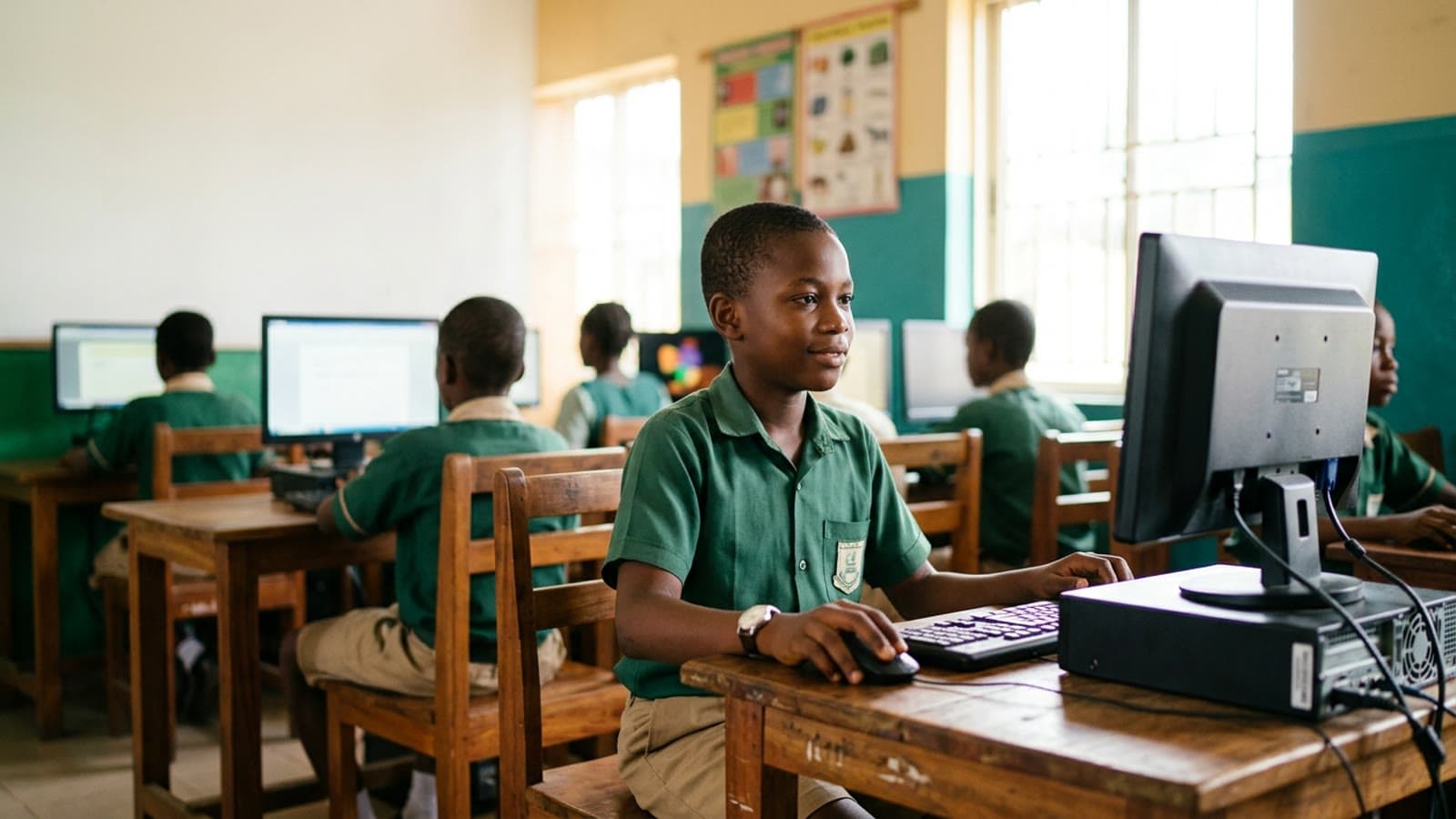
On 16 July, the Federal Government released the 2026 National Common Entrance results. Nearly 67,000 Primary 6 children sat the exam. Ten of them scored 202 out of 210. And 82 of them scored one.
One mark.
Take a second with that. The same paper, the same day, the same age group — and a spread that runs from "almost perfect" to "almost blank." It's tempting to read that as a story about clever kids and not-so-clever kids. It really isn't. And once you see what it's actually about, this year's results become one of the most useful things a Primary 5 or 6 parent can look at.
Let's decode it.
First, the plain facts
Here's what the National Examinations Council (NECO) reported, no spin:
- 66,950 candidates sat the 2026 Common Entrance on 6 June; 3,407 registered pupils didn't show up.
- The exam is scored out of 210, and it's the qualifying test for JSS1 at Nigeria's 80 Federal Government "Unity" Colleges.
- 10 candidates tied for the top score: 202/210.
- 82 candidates scored the lowest mark on record this year: 1.
Those are the numbers everyone shared. The interesting part is the bit nobody put in a headline.
The gap is real — but it's not the gap you think
Here's the uncomfortable, freeing truth: a child who scores 1 out of 210 is almost never a child who knows almost nothing. Primary 6 pupils who reach exam day have spent six years in school. They know things.
So what produces a 1?
Usually one of a small handful of very human, very fixable things:
- They ran out of clock and never reached most of the questions.
- They froze — the room, the timer, the unfamiliar format emptied their head.
- They lost marks on the answer sheet — mis-shaded, skipped a section, or filled it in wrong.
- They hit one hard question early and spiralled, never recovering.
None of those is an intelligence problem. Every one of them is a rehearsal problem. And that's the reframe that matters: the enormous 202-to-1 spread is, to a large degree, a map of who had practised the real conditions and who was meeting them cold on the day.
Why even bright children land on the wrong side of that gap
This is the part that surprises parents most, so it's worth saying clearly. When capable children underperform under exam pressure, it's often because they're capable — not despite it.
Psychologists Sian Beilock and Thomas Carr found that the students with the strongest working memory (the mind's short-term "scratchpad" for holding steps of a problem) tend to lose the most under pressure. Worry moves in and takes up the exact mental space their ability normally runs on (Beilock & Carr, Psychonomic Bulletin & Review). And a review of 238 studies across three decades found the same link between test anxiety and lower scores, in every exam format they looked at (von der Embse et al., 2018).
In everyday terms: your child's score on a cold, high-pressure morning can measure how familiar the pressure felt at least as much as it measures what they know. The good news hiding in that sentence is enormous — familiarity is trainable. Knowledge takes years. Getting used to the clock and the format takes a few weeks.
So what actually separates the 202s from the rest?
Not secret genius. Three ordinary habits, mostly:
- They'd met the clock before. They knew what 40 minutes feels like, so they paced instead of panicking.
- They'd met the format before. The answer sheet, the shading, the layout of the paper held no surprises — so all their attention went to the questions, not the machinery.
- They'd practised recovering. A hard question was a shrug, not a landslide. They dropped it and kept the easy marks coming.
That's it. That's most of the gap. Content matters — of course it does — but content with no rehearsal of the conditions is exactly how a capable child ends up far below their ability.
What you can do this week (whatever your child's level)
You don't need more hours in the day. You need a few of the hours you already spend to feel like the exam:
- Put a real timer on. Not "about an hour" — a visible, enforced clock. It's the single highest-value change most families can make.
- Match the format. For a paper exam like the NCEE, practise with a real answer sheet and shading so nothing about the paper is new on the day. If your child's exam is computer-based (like the Lagos Model Colleges screening), practise on a screen — answering by click is a different skill, and it's learnable fast.
- Do one full run, start to finish. Stamina and pacing only show up over a whole paper, not a page.
- Rehearse the bounce-back. Deliberately let a hard question go and move on. Praise the moving on, not just the right answer.
- Review pace before score. After a timed run, ask two questions before you look at marks: Did you finish? Where did the time go? A calm 60% often beats a frantic 70%.
Do those for a few weeks and you're no longer hoping your child lands on the right side of the gap — you're moving them there on purpose.
The five-minute version
If you only do one thing after reading this: watch how your child handles one timed question, today. Not a relaxed one — a timed one. You'll learn more about their exam-day readiness in five minutes than in another week of untimed worksheets.
You can do exactly that, free and with no sign-up, right here: qualificant.co/try. Five real, exam-style questions, on a clock. It's the fastest honest read on where your child actually stands.
The 202s weren't a different species. They'd just already met the morning your child is about to meet. You have time to make it familiar.
Qualificant is an independent exam-readiness platform and is not affiliated with or endorsed by NECO, Lagos State, or any school. This article is general information, not a guarantee of any exam outcome.
Sources: Legit — FG releases NCEE results, top 10 score 202/210 · The Sun — 82 candidates score just one mark · Voice of Nigeria — 2026 Unity Colleges results released · Beilock & Carr (working memory under pressure) · von der Embse et al., 2018 (test-anxiety meta-analysis).